Celebrate Sorghum’s Global Flavors Download your copy today!

Sorghum Cultivation Guide Download Now

Advanta delivers state-of-the-art Sorghum genetics to over 50 countries

From Australia to Argentina, we are helping farmers improve productivity and profits through Sorghum applications. We strive to provide superior genetics to improve yield. With our long history of research in sorghum genetics and experience in many geographies and varieties of sorghum, Advanta boasts of the widest and most diversified forage and grain sorghum portfolio.

1st

Commercial
Herbicide Tolerant
Technology

#1

Grain Sorghum Company in Argentina & Australia

100+

Sorghum
Products

Our Technologies

Advanta’s igrowth is the first global commercial herbicide tolerant technology for grain and forage sorghum. While IMI-tolerant technology has been used in crops like corn, wheat, sunflower, rice and canola for some time, Advanta was the first to commercially launch imidazolinone (“IMI”) herbicide-tolerant technology for sorghum under igrowth®. igrowth® is our solution to the growing issue of weed growth. Through a herbicide resistance trait, igrowth®, we help to suppress weeds, lowering their water and nutrient consumption. With igrowth®, farmers are able to stop weeds from growing without negatively impacting plant growth, resulting in a healthier and abundant yield.

Read More

Aphix™ is a technology incorporated into sorghum hybrids to combat sugarcane aphids (“SCA”), a pest that can cause up to 100% crop loss in sorghum fields if left uncontrolled. Aphix™ is a technology incorporated into sorghum hybrids to combat sugarcane aphids (“SCA”). Advanta was also the first to introduce sugarcane aphid tolerance traits in sorghum under Aphix™.


Vertix® is our premium seed treatment technology for corn and sorghum hybrids. It is a protective blend of chemicals designed to enhance seed performance, protect against early-season pests and pathogens, and improve crop establishment in the field. It offers a protective barrier against pathogens and pests during early crop stages. Protecting the seed and seedlings in the early stages from pathogens and insects allows farmers to maximise their seed investment. Vertix® seed treatment is used for sorghum in the United States and corn in India and Southeast Asia. We are in the process of expanding its applicability to other crops and regions.

BMR

BMR 6 is a trait that improves the digestibility of crops and feed efficiency for livestock (i.e., the ratio of daily weight gain to feed consumption), thereby increasing productivity for meat and dairy farmers. We incorporate this technology in our EMPYR product line, which is exclusively distributed in the United States, while other products with BMR 6 technology are available in Argentina, Australia, India, Africa, and other regions.

BRACHYTIC DWARF

Brachytic Dwarf is a cutting-edge forage sorghum technology that offers the best trait for superior standability and high leaf-to-stalk ratios. It produces sturdy, versatile, and high-yield plants with comparable tonnage to normal height sorghums.

DRY STALK

Dry Stalk for reduced moisture levels, for earlier baling and storage.

BIOFUMIGANT

Sorghum biofumigant technology are a type of sorghum that has been bred to produce compounds that can control nematodes and soil diseases. These compounds are released when the sorghum is chopped and incorporated into the soil. Biofumigant sorghum are high in glucosinolates that produce the biofumigant effect.They offer a number of advantages for sustainable farming systems are: can help to manage nematodes and diseases, reducing the need for pesticides; they can improve soil health, making it more fertile and productive from the combination of high biomass yield and carbon/nitrogen ratio. Overall, Advanta sorghum biofumigant hybrids are a promising new crop that has the potential to revolutionize sustainable agriculture.

PHOTOPERIOD SENSITIVITY (PS)

Photoperiod Sensitivity (PS) is an innovative technology that opens a wider production window for growers. Photoperiod Sensitive Sorghum remains vegetative until day lengths become less than 12.5 hours. Thus, giving sorghum growers the flexibility they need with a wide harvest window, allowing them to get maximum value from every sorghum acre.

LPA (LOW PRUSSIC ACID)

Low prussic acid (LPA) sorghum multi-cut hybrids has been bred by Advanta Seeds to have a lower level of hydrocyanic acid (HCN) in leaf and stems. HCN is a poisonous substance that can be harmful to animals if consumed in high levels. LPA sorghum hybrids are a safer option for farmers to grow, as they are less likely to cause poisoning when direct grazing fodder at early plant growth stages. It allows farmers to be grazing sorghum crops with the highest fodder quality. LPA sorghum multi-cut hybrids reduced risk of poisoning and increase fodder quality as could be delivered at early stage of growth.

CLIMATE CHANGE - HEAT STRESS

While the world has been struggling with climate change and increasing drought, we have been investing in developing traits and exploring management techniques that can help deliver more dependable outcomes in the harsh environments. Along with our partners University of Queensland, and Queensland’s Department of Agriculture in Australia we have completed 5 years research on identifying sorghum genes with improved heat tolerance to incorporate it into new varieties. Today we are deploying those discoveries and developing adapted superior genetic hybris with heat stress tolerance and climate resilience.

Why Sorghum

Why Sorghum

Low input – high productivity crop
Growing sorghum is very beneficial for farmer:
beneficial for farmers

Profit (low water and agricultural inputs crop). Sorghum use almost 50% less water than other grain crops.

beneficial for farmers

Rotation crop (planted after corn) sorghum enhances the soil health.

beneficial for farmers

Low cost and highly nutritive livestock feed for diary and meat industry.

The best animal nutrition

Sorghum is an excellent source of nutrition when added to diets for many animals. The grain has similar properties to corn with higher protein and energy value. It can be used in most of the animal livestock sectors. Sorghum is successfully utilized in the beef, swine, dairy and poultry industries, as well as an ingredient in pet food. Due to its high nutritional value, starch content, and good tolerance to mycotoxins, sorghum can offer a safeguard for animal nutrition. Additionally, to its nutritional benefits it is also attractive to growers when looking to decrease cropping input cost, since it has lower growing cost per ton, lower ration prices can be achieved when fed to bovine, pigs, poultry, fish, and birds.Sorghum is an excellent complementary source of energy that can improve the overall profitability of protein production industry. As per Ruminants, sorghum can be used as an interesting ingredient, with vitreous endosperm with slow degradation of starch in the rumen and reduced risk of acidosis, it can be formulated as energy pellets to help increase animal performance.

animal nutrition

Poultry Profit (low water and agricultural inputs crop). Sorghum use less water than other grain crops.

animal nutrition

Ruminant Grain sorghum can be utilized for energy as concentrates to increase performance in balanced rations. The sorghum forages are excellent for grazing,silage and hay.

animal nutrition

Pigs The digestible energy of sorghum is relatively high. That is why even unprocessed sorghum grain is very suitable for feeding pigs and can be used in ratio up to 30%.

animal nutrition

Pets Sorghum can replace corn as an excellent healthy ingredient for Pet foods with high nutrition while remaining gluten free

The new ‘Super food’

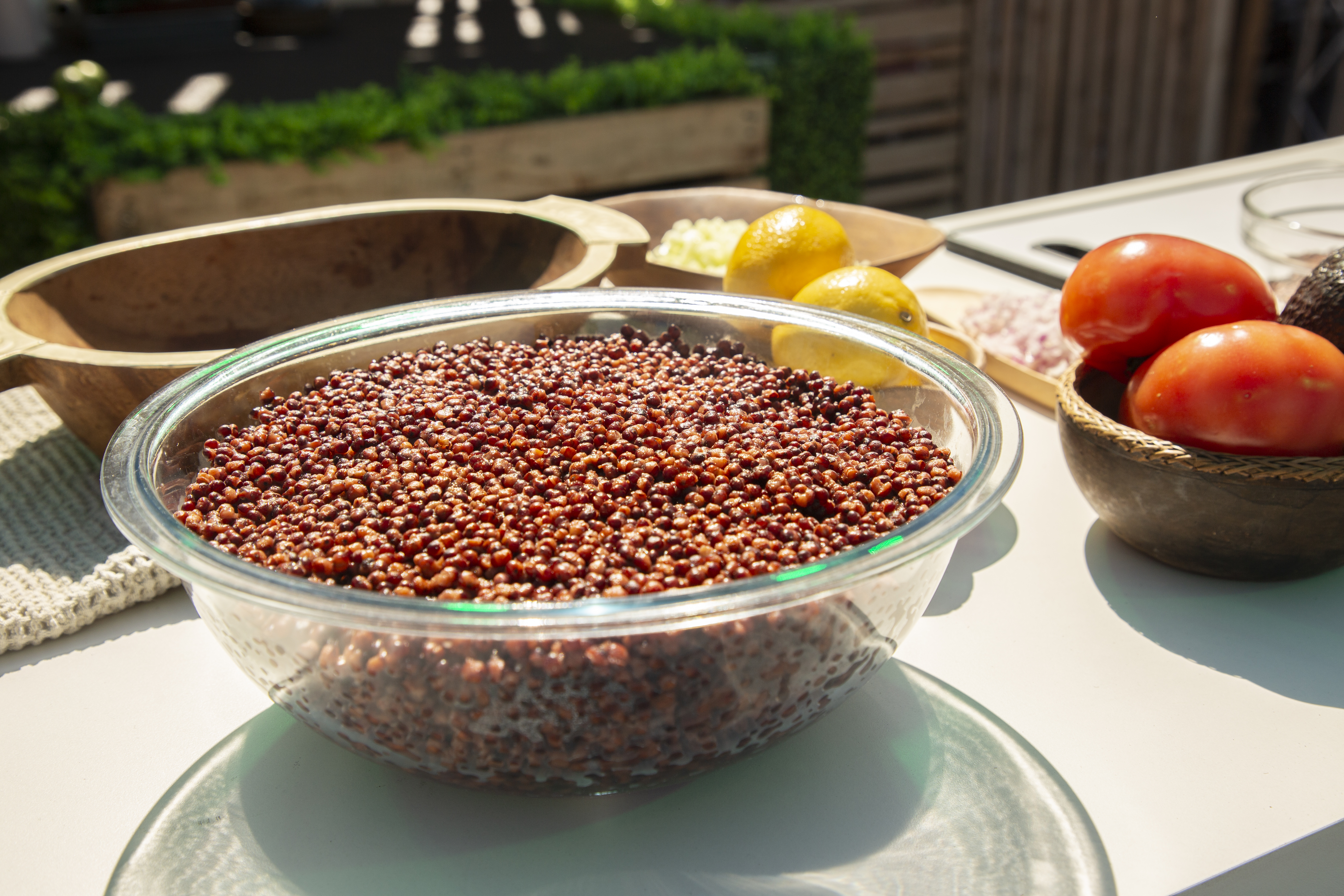
Sorghum is an intelligent food that has many advantages in food production and the culinary arts, as well as being good for our health. Sorghum is cooked like rice or quinoa and can be served in many ways. Sorghum is a versatile cereal and can be transformed into flour, whole grain, pasta, milk, pop sorghum, sorghum flakes, beer and spirits.

The Health Power of Sorghum
super food
Nutrition Sorghum grain is packed with nutrients:
  • Protein for healthy bone, muscle, skin and enzyme development.
  • Iron to strengthen the immune system and oxygen-carrying capacity in the blood.
  • Vitamin B6 is integral in synthesizing antibodies and enhancing nerve function.
  • Niacin to improve blood circulation.
  • Magnesium supports calcium absorption and body temperature regulation
  • Phosphorus helps form healthy bones
super food

Antioxidant Rich Sorghum grain is rich in antioxidants which lower the risk of cancer, diabetes, heart disease and some neurological diseases

super food

Digestive health Sorghum is high in fibre, which is the ultimate body regulator for the digestive system

super food

Blood Pressure & Circulation High in potassium and low in sodium, sorghum grain promotes healthy blood pressure. It also contains iron, copper, zinc, and magnesium, which all improve circulation.

super food

Energy Sorghum is a complex carbohydrate, which provides sustained energy. It also contains niacin, or vitamin B3, which helps convert food into energy.

super food
Gluten-Free Sorghum is 100% gluten-free and it is safe for people with Celiac’s Disease and gluten intolerance. Both sorghum flour and whole-grain sorghum are great substitutes for wheat-based recipes
super food
super food
super food
super food
A Raw Industrial Material of the Future

Sorghum genetic diversity with various high biomass yield varieties of sorghum, including forage, sweet and biomass sorghum is an excellent crop for bioenergy and biomass production.In fact, growing sorghum for methane production doesn't compete with its cultivation as a food crop. Biomass sorghum is in fact one of the intermediate biofuel producing crops which can serve a dual purpose. there are several varieties of sorghum with high biomass potential and/or a composition suitable for a number of bioenergy strategies, such as starch conversion, the use of the soluble sugars from the stem and the use of lignocellulosic biomass. Sorghum has very high energy yields, comparable to those of corn.

industrial material

Bioenergy Sorghum, rich in fiber, is used in the production of biofuel, biogas and ethanol.

industrial material

Biomaterials Sorghum is an excellent fibrous raw material to produce industrial pulp that is used for biomass-based materials like bio-plastic and paper

industrial material
Climate-Smart Crop With Positive Impact On The Environment

Climate Smart crop à No‑tillage practices and improved nitrogen‑use efficiency contribute to reducing the carbon footprint in sorghum production systems. According to Holou and Kindomihou (2017), sorghum exhibits a strong capacity for carbon sequestration, capturing between 3.4 and 7.2 Mg of CO₂ per hectare, depending on soil conditions and management practices. Their research also shows that sorghum roots can accumulate up to 14% of the total carbon captured in the combined above‑ and below‑ground biomass, highlighting the crop’s relevance as an effective tool for greenhouse‑gas mitigation.

ENVIRONMENTAL BENEFITS
climate smart crop

Saving Water Sorghum can adapt to heat and drought, requiring less water than other grains

climate smart crop

Building soil health Sorghum increases organic matter, re-cicle nutrients, capture and retain moisture and reduce soil erosion.

climate smart crop

Restoring our environment Sorghum Crop The crop has a reduced carbon footprint through no-tillage practices and nitrogen-use efficiency. Sorghum sequestrates harmful carbon from the atmosphere and stores it in the soil, cleaning our air and helping to fight climate change.

climate smart crop

Resource-Conserving Ingredient With its exceptional nutritional profile that includes protein, iron, B6, niacin, magnesium and phosphorus, this climate-smart and water saving advantages delivers value to the earth and the consumer.

climate smart crop

Building soil health the no-tillage practices and nitrogenuse efficiency helps to reduce the carbon footprint.Sorghum’s high sequestration ability helps remove harmful carbon from the atmosphere.Sorghum can capture 3.4–7.2 Mg of CO2 per hectare [20]. In addition, these previous authors found that sorghum roots can accumulate up to 14% of the total carbon capture in the above and underground biomass

Sorghum Portfolio

We have a number of sorghum products under Advanta, Alta Seeds and Pacific Seed brands. Our sorghum portfolio consists forage and grain sorghum products tested and adapted to local environment. We offer various sorghum technologies based on the needs of local growers.

South America

Argentina Argentina

Europe

Russian Federation Europe

Oceania

Australia Australia

Asia